 Cart:
Cart: 

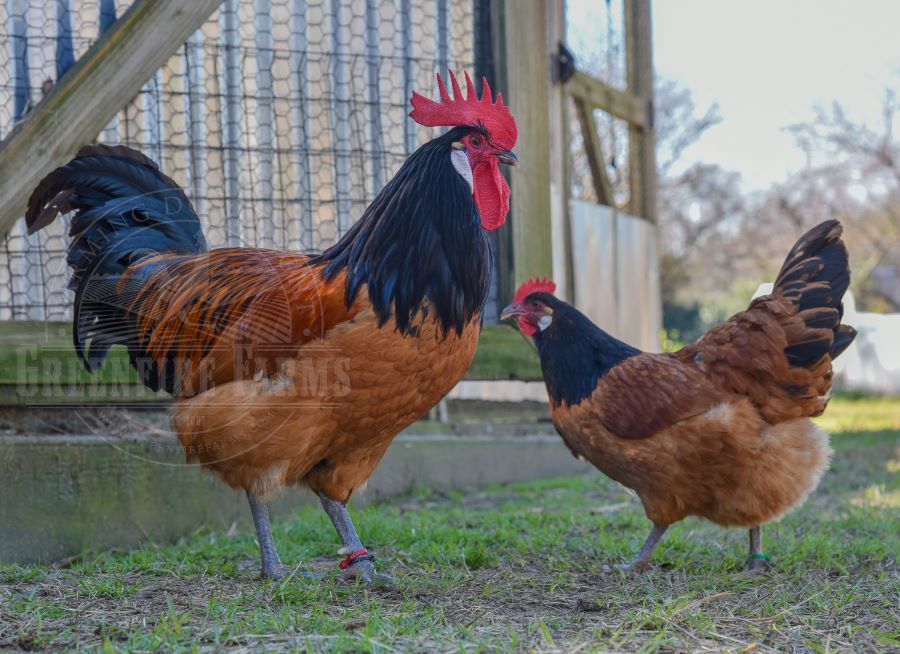
The Vorwerk is a striking representation of both elegance and functionality. A rare, dual-purpose German breed that will add a unique pop of color to your farm or homestead.
| Item | 1+ | Quantity |
|---|---|---|
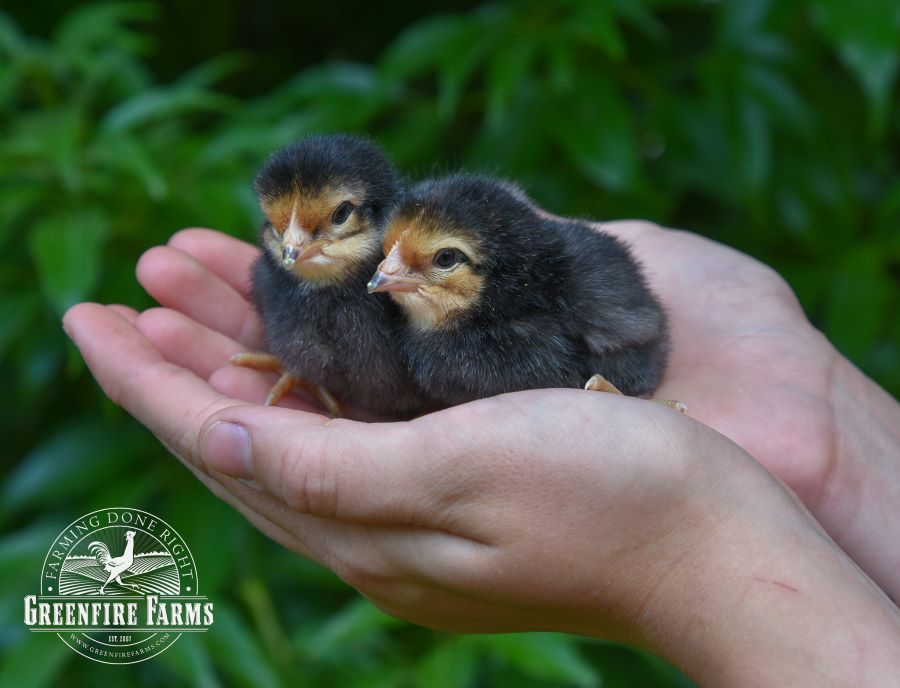
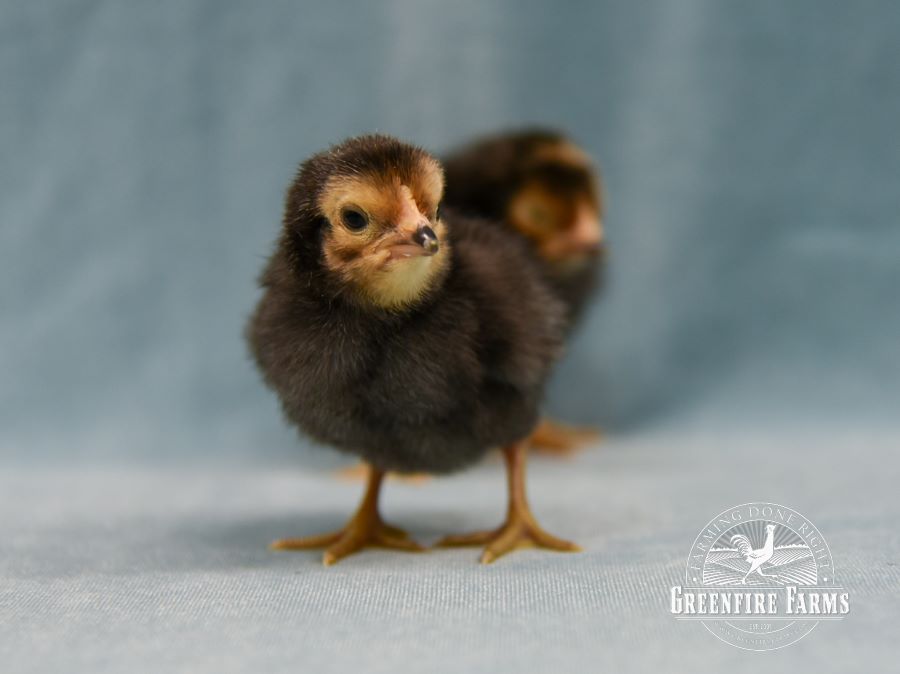
| Vorwerk Day-Old Chick Unsexed | 39.00 | |
| Vorwerk Eggs | 12.00 | Sold Out |
Breed History
The Vorwerk is a beautiful and hardy, dual purpose breed that was developed in Germany more than a century ago by Oskar Vorwerk. His goal was to create a breed that was highly productive, medium-sized, good for the table, and had a unique appearance. After experimenting with the Lakenvelders, buff Orpingtons, buff Sussex, and Andalusians, he successfully created the Vorwerk that we know today. The Vorwerk has always been a rare chicken breed despite its remarkable two-tone color pattern. In 1913, the breed was standardized. There are both large fowl and bantam versions of the Vorwerk and while Greenfire Farms only has the large fowl version, a bantam version of the Vorwerk has existed in the United States for a few decades. These American bantams were not imported but instead developed in this country by a Minnesotan in 1966.
It is important to note that there is a lot of confusion about the difference or rather similarity between the Vorwerk and the Lakenvelder. There rae people that claim the golden Lakenvelders and Vorwerk are the same breed, but this is incorrect. While they do look very similar in terms of their coloration, there are many differences in their history, body confirmation, temperament, and production. The Lakenvelder are an older breed and were used to create the Vorwerk but they are fundamentally different.
Appearance and Behavior
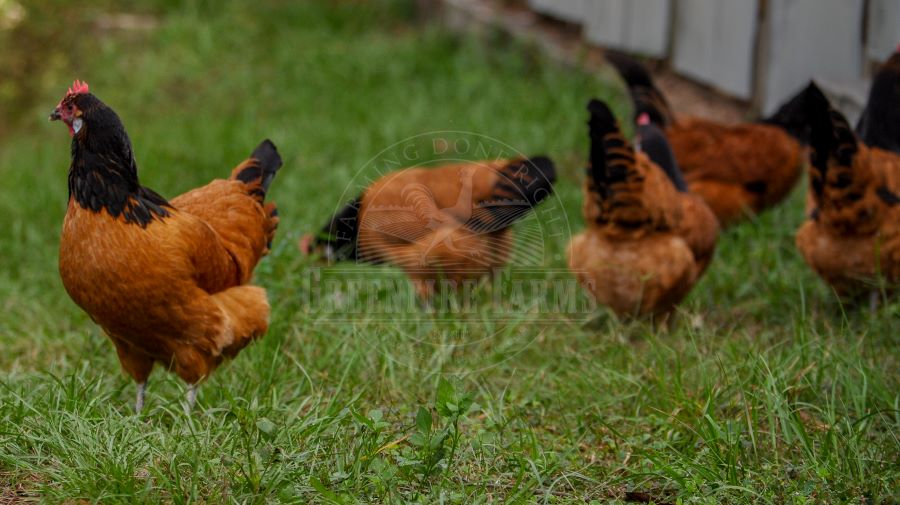
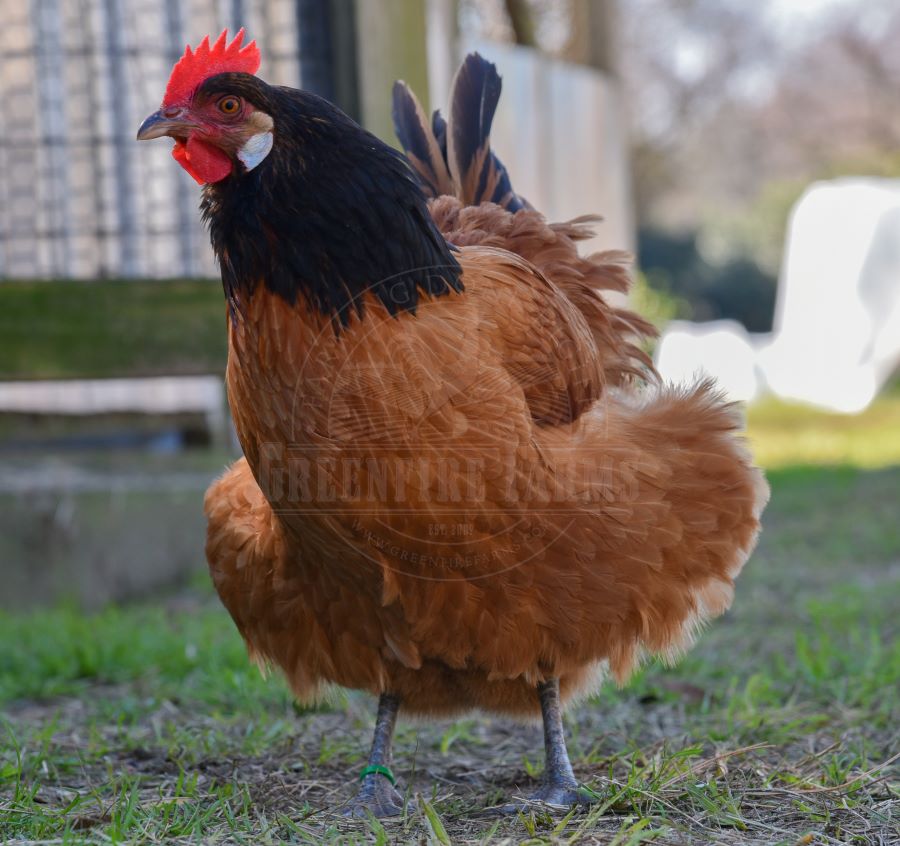
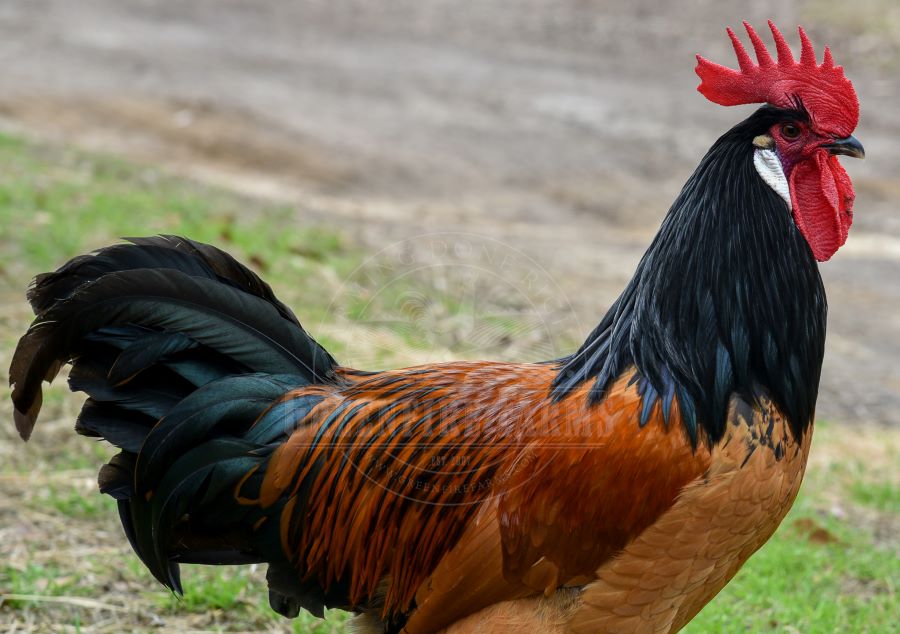
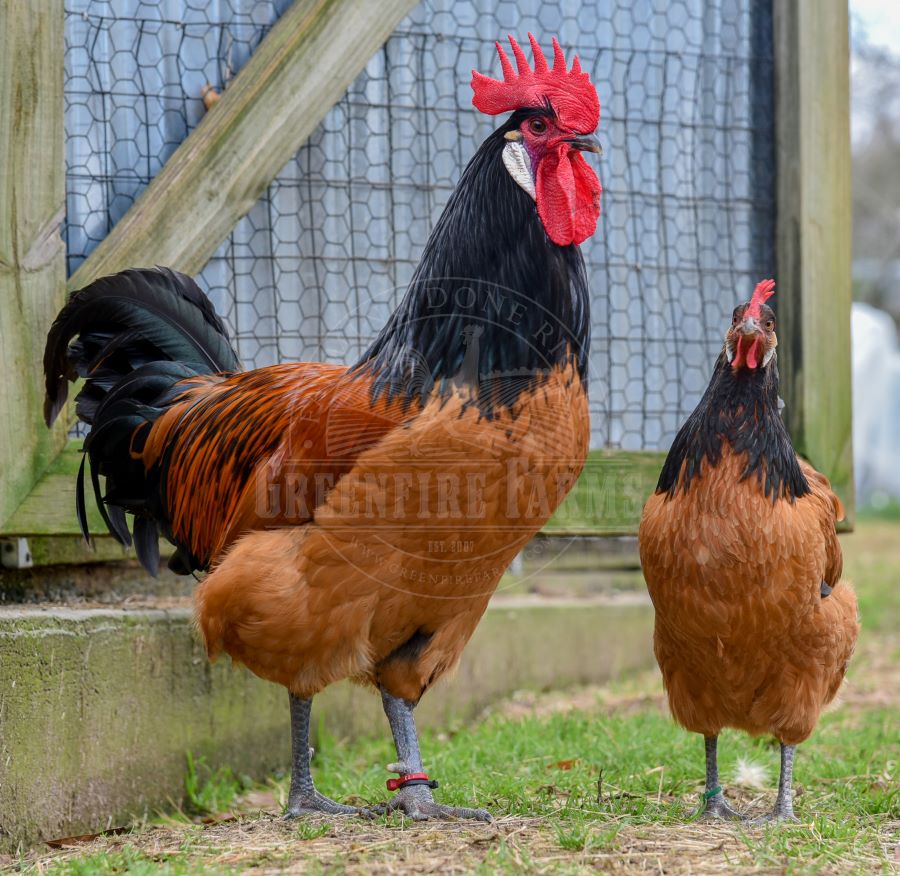
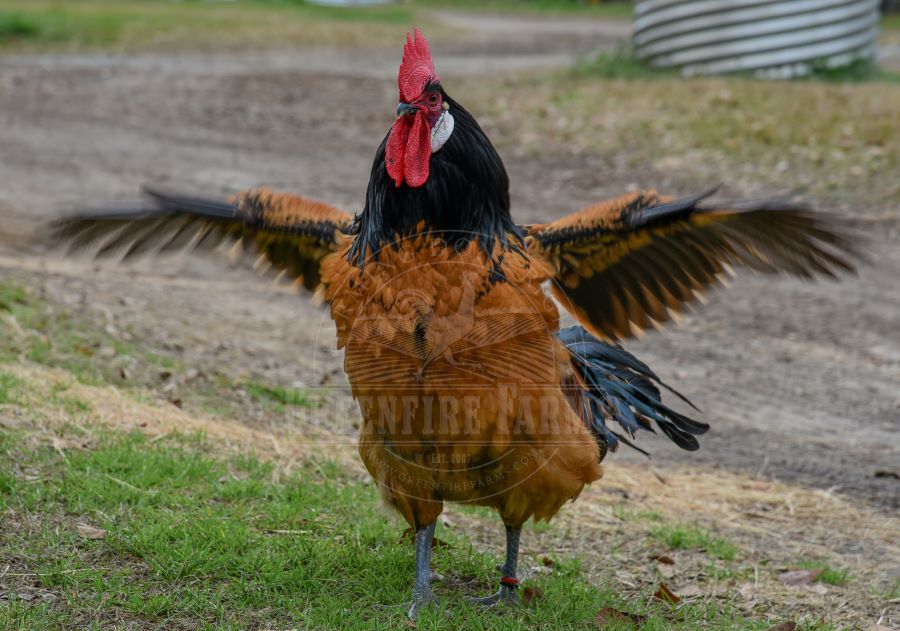
The Vorwerk is a medium-sized breed with roosters reaching a mature weight between 5.5 to 7 lbs and the hens typically weigh between 4.5 to 5.5 lbs. They display a unique two-toned color pattern of gold and black plumage. Their necks, hackles, and tail are black whereas their body and wings are gold. This creates quite a unique and elegant appearance. They also have a single ridge comb, white earlobes, and slate-colored clean legs.
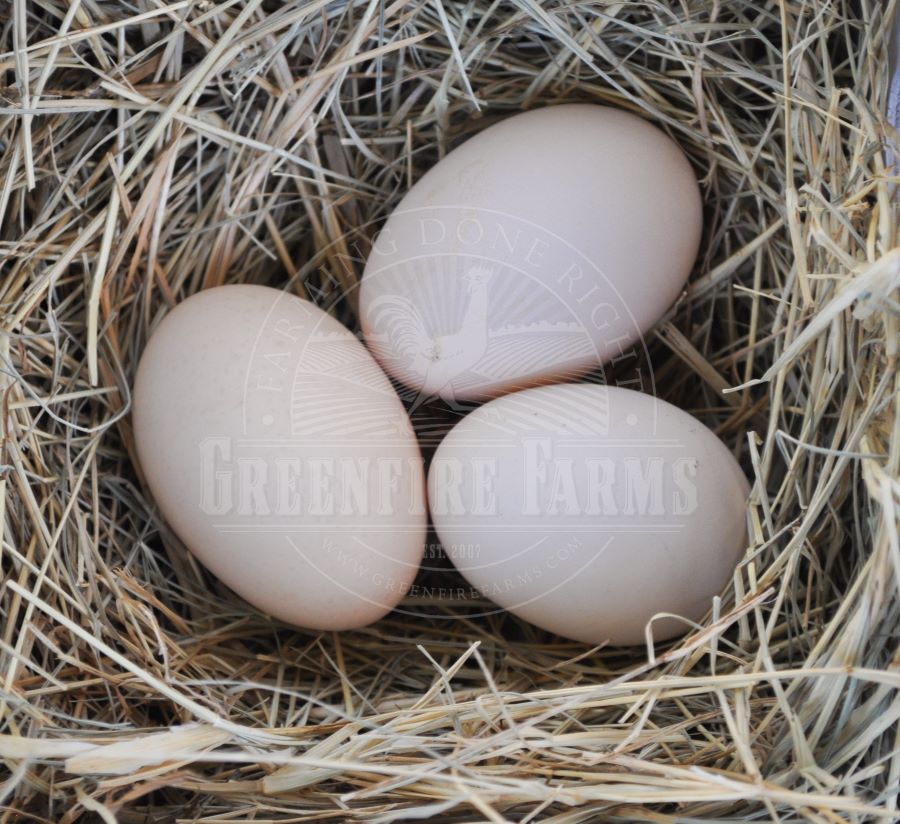
Typically this breed is friendly and easy to handle. They aren't overly flighty so they will do well in a coop but will also do moderately well in a free-range environment. The hens don't become very broody, meaning they don't typically want to sit on a clutch of eggs to hatch them out. So we recommend purchasing a good quality incubator if you wish to hatch their eggs. Since they don't routinely go broody this means they are more consistent layers and you'll typically see a hen will lay around 200 medium-sized tinted or cream-colored eggs per year.
This breed tends to stay very active and will happily forage and search for tasty treats. The nice benefit of this breed is that they have a lower feed to muscle conversion rate compared to other table breeds so they are a more economical option for a table breed. They seem to be very hardy, handling the summer heat in North Florida with ease but also handling the low temperatures of winter without issues. Depending on your environment there is a risk of frostbite on their combs but otherwise they are a great cold hardy option.
We have found that this breed does well at a typical rooster to hen ratio of about 1:10. Bird integrations of this breed typically go well, with moderate fighting when they re-establish a hierarchy but then they seem to coexist pretty quickly. We haven't experienced them being difficult to integrate.
Breed Standard
If you are interested in reading over the standard for the breed, you can view that here -Vorwerk Standard.
Import Notes
Greenfire Farms first imported the Vorwerk in 2016 but we unfortunately had to stop working with them in 2020 due to unforeseen circumstances. We knew we weren't done with the breed so we knew we had to import them again. We successfully imported more in 2021 and 2023, directly from German stock. Starting in 2025, we will sell chicks and hatching eggs produced from this blended line from both imports. We are so excited to be working with them again!
Hatching Eggs
We incubate at 99.5F and 55% humidity. Once you've placed your eggs into your hatcher for lockdown, you should expect them to hatch fairly well. Normally we see about a 90% hatch from the eggs we've placed into the hatcher and they typically hatch on time on day 21. You may see a couple of chicks hatch a day or 2 late.
Breed Notes
We highly recommend that you chose to have these day-old chicks vaccinated for Marek's disease as they seem to have lowere natural immunity and are more susceptible to the virus.
The Vorwerk is a beautiful and hardy, dual purpose breed that was developed in Germany more than a century ago by Oskar Vorwerk. His goal was to create a breed that was highly productive, medium-sized, good for the table, and had a unique appearance. After experimenting with the Lakenvelders, buff Orpingtons, buff Sussex, and Andalusians, he successfully created the Vorwerk that we know today. The Vorwerk has always been a rare chicken breed despite its remarkable two-tone color pattern. In 1913, the breed was standardized. There are both large fowl and bantam versions of the Vorwerk and while Greenfire Farms only has the large fowl version, a bantam version of the Vorwerk has existed in the United States for a few decades. These American bantams were not imported but instead developed in this country by a Minnesotan in 1966.
It is important to note that there is a lot of confusion about the difference or rather similarity between the Vorwerk and the Lakenvelder. There rae people that claim the golden Lakenvelders and Vorwerk are the same breed, but this is incorrect. While they do look very similar in terms of their coloration, there are many differences in their history, body confirmation, temperament, and production. The Lakenvelder are an older breed and were used to create the Vorwerk but they are fundamentally different.
Appearance and Behavior
The Vorwerk is a medium-sized breed with roosters reaching a mature weight between 5.5 to 7 lbs and the hens typically weigh between 4.5 to 5.5 lbs. They display a unique two-toned color pattern of gold and black plumage. Their necks, hackles, and tail are black whereas their body and wings are gold. This creates quite a unique and elegant appearance. They also have a single ridge comb, white earlobes, and slate-colored clean legs.
Typically this breed is friendly and easy to handle. They aren't overly flighty so they will do well in a coop but will also do moderately well in a free-range environment. The hens don't become very broody, meaning they don't typically want to sit on a clutch of eggs to hatch them out. So we recommend purchasing a good quality incubator if you wish to hatch their eggs. Since they don't routinely go broody this means they are more consistent layers and you'll typically see a hen will lay around 200 medium-sized tinted or cream-colored eggs per year.
This breed tends to stay very active and will happily forage and search for tasty treats. The nice benefit of this breed is that they have a lower feed to muscle conversion rate compared to other table breeds so they are a more economical option for a table breed. They seem to be very hardy, handling the summer heat in North Florida with ease but also handling the low temperatures of winter without issues. Depending on your environment there is a risk of frostbite on their combs but otherwise they are a great cold hardy option.
We have found that this breed does well at a typical rooster to hen ratio of about 1:10. Bird integrations of this breed typically go well, with moderate fighting when they re-establish a hierarchy but then they seem to coexist pretty quickly. We haven't experienced them being difficult to integrate.
Breed Standard
If you are interested in reading over the standard for the breed, you can view that here -Vorwerk Standard.
Import Notes
Greenfire Farms first imported the Vorwerk in 2016 but we unfortunately had to stop working with them in 2020 due to unforeseen circumstances. We knew we weren't done with the breed so we knew we had to import them again. We successfully imported more in 2021 and 2023, directly from German stock. Starting in 2025, we will sell chicks and hatching eggs produced from this blended line from both imports. We are so excited to be working with them again!
Hatching Eggs
We incubate at 99.5F and 55% humidity. Once you've placed your eggs into your hatcher for lockdown, you should expect them to hatch fairly well. Normally we see about a 90% hatch from the eggs we've placed into the hatcher and they typically hatch on time on day 21. You may see a couple of chicks hatch a day or 2 late.
Breed Notes
We highly recommend that you chose to have these day-old chicks vaccinated for Marek's disease as they seem to have lowere natural immunity and are more susceptible to the virus.
| Egg Color | tinted |
| Egg Size | Medium |
| Average number of eggs per year | 200 - 250 |
| Gamefowl | No |
| Table Breeds | Yes |
| Country of Origin | Germany |
| Also called | Vorwerkhuhn |
| Cold tolerant | Yes |
| Year of import(s) | 2021, 2023 |
| Landrace | No |
| Great for beginners | No |
| Free-range ability | Moderately. |
| Broodiness | Not often to never |
| Ideal Rooster-to-hen Ratio | Average, 1:10 |
| Auto-sexing | No |