


Chickens 101

Your Essential Guide to Raising a Healthy Flock

Setting Up the Brooder
Prepare a brooder box (a large plastic bin or cardboard box) with traction bedding like paper towels. Ensure the temperature is maintained at 95°F for the first week and lower it by 5°F each subsequent week. You can use an incandescent bulb or a brooder heater panel.
Feeding Your Chicks
Feed your chicks medicated starter crumbles to prevent common diseases like coccidiosis. Keep their water clean and always available. Wash their waterers regularly, as chicks will often dirty the water.
Health Tips for Chicks
Ensure your chicks are hydrated immediately upon arrival. A quick dip of their beak into warm water will help rehydrate them after their journey. Monitor the temperature in the brooder closely, as incorrect temperature is a common cause of illness.
Adolescents: Transitioning to the Coop
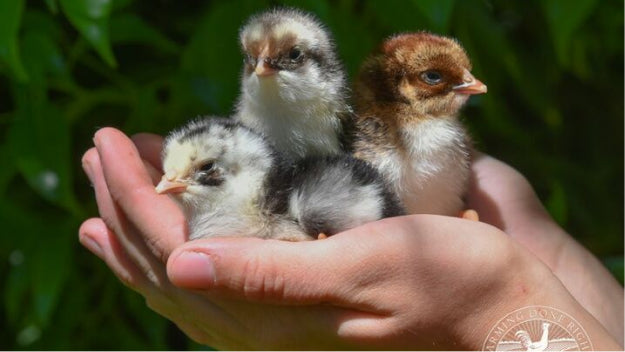
Once your chicks hit the 4-week mark, they will begin transitioning from fragile hatchlings to growing adolescents. Here’s how to manage their care during this critical phase:
Feeding During Growth
You can continue with starter crumbles or gradually switch to grower crumbles as they mature. Make sure they have constant access to clean food and water.
Coop Setup
When your chicks are ready to move outdoors, a well-designed coop is crucial. Build a coop that provides 2 sq. ft. per chicken and an enclosed run with at least 10 sq. ft. of outdoor space per chicken. The run allows them to scratch, forage, and socialize.
Security and Maintenance
Protect your flock from predators by installing a fence around the coop and run, burying wire to prevent digging predators, and securing the area with a predator-proof gate. Clean the coop regularly to prevent buildup of waste, which can lead to disease.

Egg Laying
Hens will start laying between 5 to 6 months old, depending on the breed. Most heritage breeds will lay between 150 to 200 eggs a year, with production peaking in April. Make sure to provide laying hens with clean, dry nest boxes to collect their eggs easily.
Rooster Management
Roosters mature around the same time as hens and will begin mating with the hens. Be mindful of the rooster-to-hen ratio; one rooster can handle up to 20 hens. Introducing multiple adult roosters is generally not recommended due to territorial aggression.
Feeding Adults
Switch to a high-quality laying pellet to keep egg production high. Chickens love grains, nuts, and vegetables as supplemental treats, but avoid fatty foods, meat, and dairy. Hanging feeders and nipple waterers help keep their food and water clean and reduce waste.
Maintaining a Healthy Flock
The key to keeping chickens healthy is consistent care and a clean environment. Here are a few important tips:



Ready to Start Your Flock?